Mobile Fleet Repair Costs: What Fleet Managers Should Budget For
Managing a fleet means balancing vehicle reliability, operating expenses, driver productivity, and customer commitments. When a vehicle breaks down, the repair bill is only one part of the financial impact. Towing, lost working time, missed routes, replacement vehicles, and emergency service can quickly increase the total cost.
That is why understanding mobile fleet repaircost is important when building a realistic fleet maintenance budget. Mobile repair allows technicians to service eligible vehicles where they are located, reducing the need to transport every vehicle to a traditional repair facility.
For fleet managers, the goal is not simply to find the lowest repair invoice. It is to understand what drives repair expenses and create a budget that supports reliable vehicle availability.
What Is Included in Mobile Fleet Repair Cost?
A mobile repair invoice can include several different charges. The exact amount depends on the vehicle, repair required, location, technician time, and parts involved.
Common cost components include:
Diagnostic and inspection services
Technician labor
Replacement parts
Fluids and consumables
Travel or service-call charges
Emergency or after-hours service
Specialized diagnostic equipment
Additional labor for complex repairs
Some repairs are straightforward. A battery replacement, brake inspection, minor electrical repair, or scheduled maintenance service may take relatively little time. More complicated problems involving engines, transmissions, electrical systems, or advanced vehicle electronics can require additional labor and parts.
Fleet managers should therefore avoid creating a budget around one fixed repair price. A better approach is to establish realistic spending ranges based on vehicle type, age, mileage, and operating conditions.
Factors That Influence Fleet Repair Pricing
Several factors can affect fleet repair pricing. Understanding them makes it easier to compare service quotes and anticipate future expenses.
1. Vehicle Type
A small service van and a heavy-duty commercial truck do not have the same maintenance requirements. Larger vehicles often require more expensive parts, specialized tools, and additional technician time.
Your fleet budget should separate vehicles by class rather than applying one average repair amount to every unit.
2. Vehicle Age and Mileage
Older vehicles generally require closer attention because components experience more wear over time. High-mileage vehicles may also need repairs involving suspension components, brakes, cooling systems, steering, electrical systems, and other wear items.
Tracking repair expenses by vehicle can help identify units that are becoming increasingly expensive to operate.
3. Type of Repair
Routine maintenance is usually easier to forecast than unexpected mechanical failures. Oil and filter services, inspections, fluid replacement, and other scheduled work can be planned ahead.
Unexpected repairs are harder to budget because the severity of the problem is unknown until a technician diagnoses it.
4. Parts Selection
The parts required for a repair can represent a substantial portion of the final invoice. OEM, aftermarket, and remanufactured components may have different prices and availability.
Fleet managers should discuss available parts options with their repair provider while considering vehicle requirements, warranty considerations, reliability, and expected service life.
5. Location and Service Timing
A repair performed at a convenient fleet location during normal business hours may have different charges from an emergency roadside call late at night.
Travel distance, accessibility, urgency, and technician availability can all influence the final price.
How Much Should Fleets Budget for Mobile Repairs?
There is no universal mobile repair price that applies to every fleet. Industry cost benchmarks vary considerably based on vehicle type, mileage, maintenance strategy, region, and what expenses are included. For example, recent fleet-maintenance estimates place maintenance costs across many fleets in a broad range of roughly $0.09 to $0.15 per mile, while heavy-duty operations can differ substantially from light-duty fleets.
For budgeting purposes, fleet managers should establish three categories:
Planned maintenance: Include scheduled inspections, oil and filter services, fluid services, brake inspections, and other recurring maintenance.
Expected repairs: Set aside funds for normal wear items and repairs based on the age and mileage of each vehicle.
Emergency repairs: Maintain a reserve for unexpected breakdowns, roadside service, expedited parts, and other unplanned expenses.
This approach is more useful than relying on one annual average.
Understanding On-Site Mechanic Cost for Fleets
When evaluating on-site mechanic cost for fleets, remember that the invoice should be considered alongside the operational value of keeping vehicles at their current location.
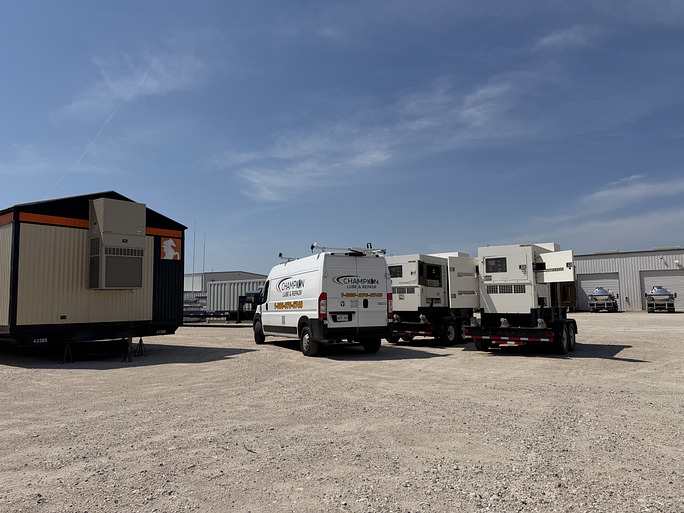
Traditional repairs can require a vehicle to be driven or towed to a shop. That process can consume driver time and take the vehicle out of service. Mobile service brings the technician to the vehicle when the repair is suitable for on-site completion.
That does not mean mobile service is automatically less expensive for every repair. Some major repairs still require shop equipment or facilities. However, eliminating unnecessary towing and reducing transportation time can change the total cost of a repair event.
Towing and downtime should therefore be included when comparing repair options. Fleet-management guidance notes that downtime can include towing, replacement-vehicle expenses, administrative time, and lost employee productivity in addition to the repair itself.
Budget for Preventive Maintenance, Not Just Breakdowns
One of the most effective ways to make fleet repair spending more predictable is to prioritize preventive maintenance.
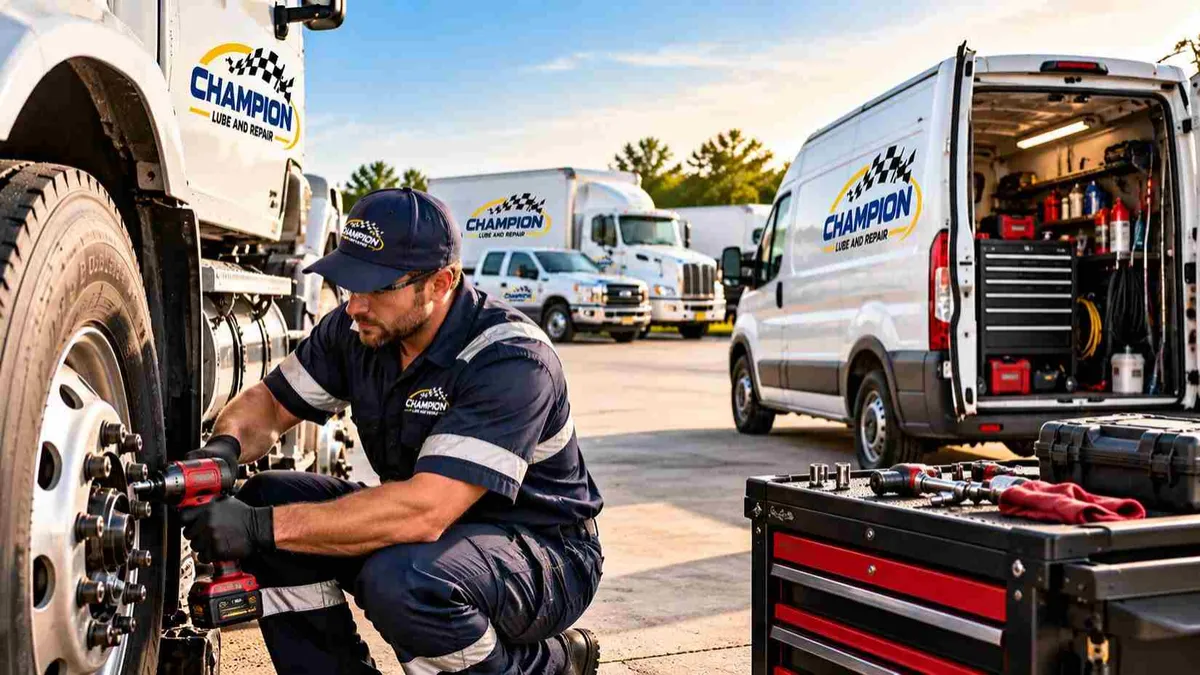
A preventive maintenance program helps identify developing problems before they become major breakdowns. Regular inspections can reveal worn tires, brake issues, fluid leaks, battery problems, and other concerns that might otherwise lead to an emergency service call. Champion Lube and Repair provides fleet maintenance support that can help businesses address routine service needs before they become costly breakdowns.
Fleet maintenance guidance also emphasizes the importance of consistent inspections, maintenance schedules, and records for controlling costs and improving uptime.
When building your budget, allocate funds for:
Routine inspections
Oil and filter changes
Brake inspections
Tire checks
Battery testing
Fluid services
Preventive component replacement
Diagnostic inspections
Minor repairs discovered during scheduled service
Planned spending may seem like an additional expense, but it can help reduce the frequency and severity of unexpected repairs.
Track Repair Cost Per Vehicle
A fleet-wide maintenance budget becomes more useful when managers track individual vehicle performance.
For every vehicle, record:
Repair date
Mileage
Type of repair
Labor expense
Parts expense
Diagnostic charges
Downtime
Towing or transportation expenses
Repeat repair issues
Over time, this information can reveal patterns.
For example, if one vehicle consistently requires repairs while similar vehicles remain reliable, the fleet manager can investigate whether its age, usage, maintenance history, or condition justifies continued operation.
Cost-per-mile tracking can also help identify changes in fleet performance. Industry guidance recommends including relevant parts, labor, diagnostics, and repair expenses when calculating maintenance cost per mile.
Consider the Cost of Downtime
A repair budget should not stop at the mechanic's invoice.
Suppose a delivery vehicle is unavailable for an entire day. The business may lose productive driving hours, need another vehicle, rearrange routes, pay overtime, or delay customer appointments.
These indirect expenses can make a relatively small mechanical problem much more expensive.
Mobile repairs can help reduce some of these costs when the required work can be completed where the vehicle is parked. A technician can potentially diagnose and repair the vehicle without requiring a trip to a repair facility.
This is particularly valuable for fleets that depend on continuous vehicle availability.
Build an Emergency Repair Reserve
Even with a strong preventive maintenance program, unexpected failures will happen.
Fleet managers should maintain an emergency reserve rather than allowing every unexpected repair to disrupt the monthly operating budget.
The appropriate reserve depends on factors such as:
Number of vehicles
Vehicle age
Average annual mileage
Vehicle type
Operating environment
Historical repair frequency
Replacement-vehicle availability
Fleet utilization
Review the reserve regularly using actual repair records. If emergency spending consistently exceeds the budget, investigate the underlying causes rather than simply increasing the budget.
Compare Mobile Repair With Traditional Shop Service
The right repair option depends on the problem.
Mobile repair can be useful for services that can safely and effectively be completed at the vehicle's location. This may include certain maintenance services, diagnostics, electrical work, battery services, brake-related repairs, and other repairs depending on the vehicle and equipment available.
A traditional shop may be more appropriate for major engine, transmission, fabrication, or other repairs requiring specialized facilities.
The most practical strategy may be to use both options. Mobile service can handle appropriate on-site work, while complex repairs can be directed to a properly equipped facility.
Final Thoughts
Understanding mobile fleet repair cost helps fleet managers create more realistic maintenance budgets and make better operational decisions. Instead of looking only at the repair invoice, consider labor, parts, diagnostics, towing, downtime, vehicle age, and the potential cost of missed work.
A proactive maintenance strategy can also make spending more predictable. Track repair history, monitor cost per vehicle, maintain an emergency reserve, and address small problems before they develop into larger failures.
When your fleet needs dependable maintenance or on-site repair support, Champion Lube and Repair can help you keep your vehicles operating and reduce unnecessary interruptions. Contact the team to discuss your fleet's repair and maintenance needs and develop a service approach that fits your operation.
Frequently Asked Questions
1. What affects mobile fleet repair cost?
The main factors include vehicle type, repair complexity, labor time, parts, diagnostics, travel distance, service timing, and whether the repair is scheduled or an emergency.
2. Is mobile fleet repair cheaper than taking a vehicle to a shop?
Not necessarily in every situation. However, mobile service can reduce towing, transportation, and some downtime expenses when the repair can be completed safely at the vehicle's location.
3. How can fleet managers control repair expenses?
Regular preventive maintenance, accurate repair records, vehicle inspections, cost-per-mile tracking, and an emergency repair reserve can help fleet managers control and forecast expenses.
4. What should be included in a fleet repair budget?
A fleet budget should account for scheduled maintenance, expected wear-item replacement, unexpected repairs, diagnostics, parts, labor, roadside service, and potential downtime-related expenses.
5. When should a fleet use an on-site mechanic?
An on-site mechanic can be useful when a vehicle needs eligible maintenance, diagnostics, or repairs at its current location and moving the vehicle to a repair facility would create unnecessary downtime or transportation costs.